Hair Brush vs Hair Comb: Which One Should You Use and When

When it comes to everyday hair care, choosing between a hair brush and a hair comb may seem like a small decision. But the right hair grooming tool can make a noticeable difference to how easily you detangle your hair, distribute products, create a hairstyle, add volume or simply maintain a neat and polished look.
In reality, in the debate between hair brush vs comb which is better, there is no single winner. Both serve different purposes and can be useful at different stages of your hair care and styling routine. For instance, a wide-tooth comb can be a gentle choice for detangling thick and curly hair types while a paddle brush may be ideal for smoothing and managing longer hair. Similarly, a round brush can help create a natural volume whereas a fine-tooth comb can come in handy when you need precision. But which is better brush or comb for hair? This guide breaks down the differences, their uses and how each works for hair.
Hair Brush vs Hair Comb: What Is the Difference?#
For a simple understanding on the difference between the two, it majorly lies in their design:
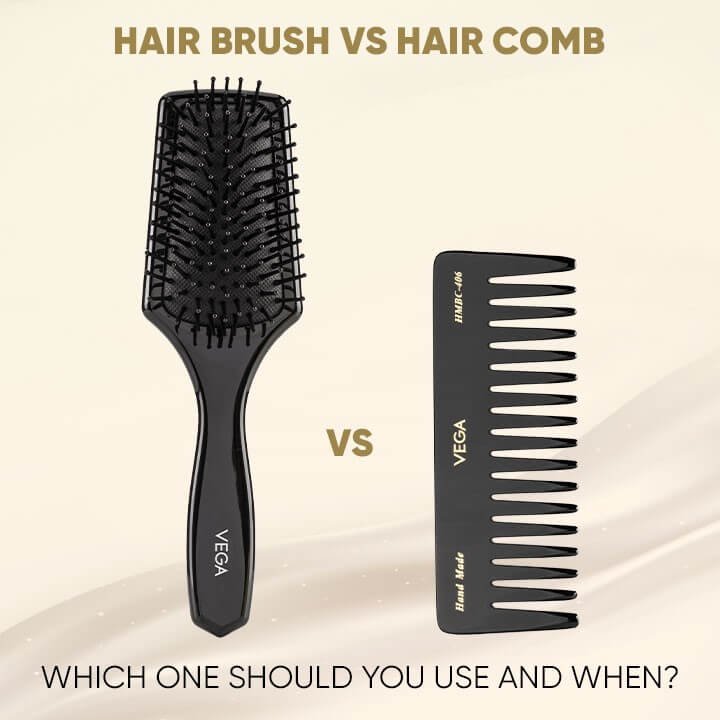
- A hair comb features rows of teeth that move through the hair to separate strands, detangle, section and shape them. Combs are available in different tooth widths and sizes, making them suitable for a variety of hair types and styling needs.
- A hair brush features bristles attached to a cushioned or structured base. Depending on the type of brush, the bristles can help smooth the hair, detangle larger sections, distribute natural oils and create volume.
When Should You Use a Hair Comb?#
A hair comb is a versatile grooming tool that can be used for detangling, sectioning, styling and maintaining your hairstyle throughout the day. Different types of combs are designed for different purposes.
1. Wide-Tooth Comb for Gentle Detangling#
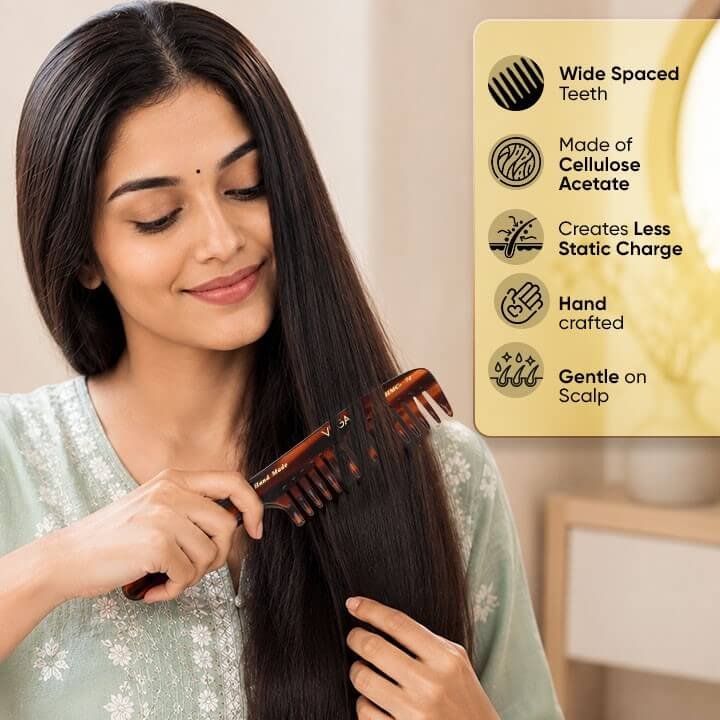
A wide-tooth comb is often a useful choice when your hair is tangled and you want to work through knots gradually. The wider spacing between the teeth allows the comb to move through larger sections of hair. It can be a particularly useful comb for long hair along with curly, wavy, thick and hair that tends to tangle easily. For the best results, choose a cellulose acetate comb that is made from non-petroleum-based material derived from plats that creates less static charge with results in minimum hair frizz.
When detangling, it is generally best to start from the ends and gradually work your way upward. This can help you loosen knots instead of pulling them down through the entire length of the hair.
2. Fine-Tooth Comb for Precision Styling#
A fine-tooth comb is the ideal comb for straight hair and thin hair and is designed for more detailed grooming and styling. Its closely placed teeth can help create a neat and controlled finish. It is useful for:
- Smoothing small sections
- Styling sleek hairstyles
- Neatening the hair around the hairline
- Distributing styling products through shorter hair
3. Tail Comb for Sectioning Hair#
A tail comb is the best comb for hair to style and create more structured hairstyles. The pointed handle can help separate the hair into neat sections. It is useful for:
- Creating straight partings
- Sectioning hair before blow-drying
- Preparing hair for braids
- Creating detailed hairstyles
- Dividing the hair before using styling tools
When Should You Use a Hair Brush?#
Hair brushes are available in several shapes and designs, with each type serving a different purpose. From everyday detangling to creating salon-style volume, the right brush can help make styling easier.
1. Paddle Brush for Smooth, Everyday Hair#
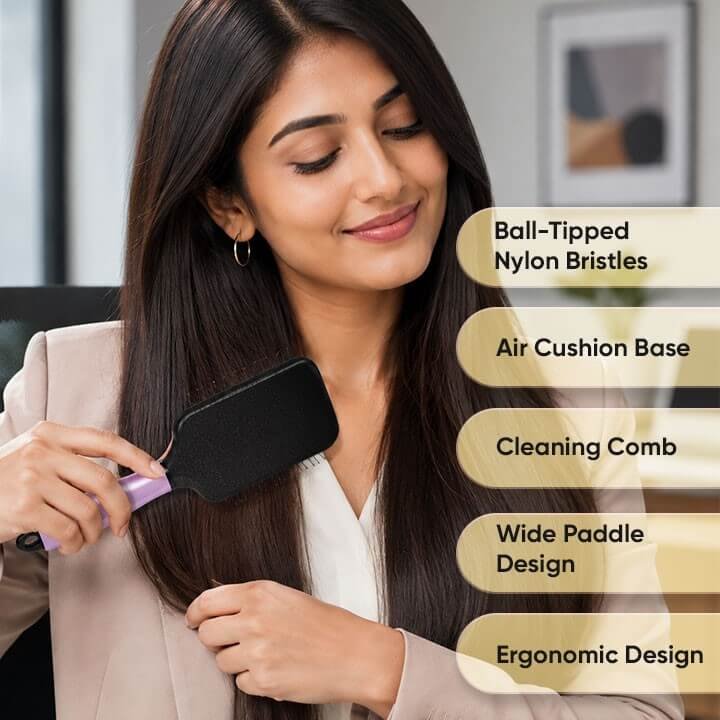
A paddle brush usually features a broad, wide and flat surface that allows you to brush larger sections of hair at once. It proves to be the best hair brush for all hair types, especially long and straight hair by providing maximum hair coverage. Try the Vega Paddle Brush that features a wide paddle base for excellent hair coverage along with ball-tipped nylon bristles that are gentle on the scalp. The air cushion base of the hair base protects the scalp and hair follicles, ensuring smooth and relaxing hair brushing. What’s more? It also comes with a cleaning comb attached at the bottom to easily clean hair after use.
2. Round Brush for Volume and Blow-Drying#
If your goal is to create volume and movement, a round brush can be a great styling companion. It can help lift the hair at the roots and shape the lengths. It helps to add bounce and deliver that fuller, natural look, perfect for office, parties, daily errands or just any given day.
3. Detangling Brush for Wet Hair Grooming#
Featuring unique vents or openings at the back of a detangling hair brush, this design causes less friction and also allows warm air from a hair dryer to pass through the brush more easily, minimizing hair tangling and breakage while drying and styling. The wide and soft bristles with round ballpoints of the hair brush for detangling are gentle on the hair and perfect to use on both wet and dry hair. Also an ideal hair brush for long hair, you can work through damp hair during drying, detangle smoothly or create a more natural-looking finish, this versatile brush is perfect for all hair types.
Tips for Brushing and Combing Your Hair#
No matter which hair grooming tool you choose, how you use it can make a difference:
- Start from the ends: Be it hair brush vs comb for curly hair or any hair type, when detangling, begin at the ends and slowly work upward to help loosen knots gradually.
- Work in sections: If your hair is thick, long or tangled, dividing it into sections can make grooming easier.
- Avoid aggressive pulling: If you encounter a stubborn knot, pause and work through it gently rather than pulling forcefully.
- Keep your tools clean: Hair, dust and product residue can collect on brushes and combs over time. Remove loose hair regularly and clean your tools according to their material and care instructions.
- Use the right tool for the job: A comb is not always the best tool for creating volume, and a large brush may not give you the precision needed for a sharp parting. Matching the tool to the task can make styling simpler.
Final Takeaway#
So, the difference between hair brush and comb is only how they work as they both offer their own unique benefits. Instead of choosing between the two, consider building a versatile hair grooming routine with both the tools as per your hair type for different grooming, detangling and styling needs. With the right hair brush or comb in hand, everyday grooming can become easier and more efficient.